THE ART OF STYLE
JUNE 2026 ISSUE EXCERPT FROM THEA’S LIFE
Copyright © 2026 ATELIERDAWN. All Rights Reserved.
INTRODUCTION Thea is a South Korean filmmaker, screenwriter, and creative producer whose work has earned international recognition for its restrained emotionality and unmistakable visual language. Widely regarded as one of the defining auteurs of her generation, Thea has cultivated a body of work distinguished by its quiet intimacy, favoring silence over exposition and atmosphere over spectacle. Her films examine the fragile intersections of memory, longing, estrangement, and belonging, inviting audiences to inhabit the emotional spaces between words rather than the words themselves. Premiering at prestigious festivals including Cannes, Venice, Berlin, Toronto, and Busan, her work has been celebrated for transforming the ordinary into cinema of remarkable emotional depth.Despite her global acclaim, Thea remains an intensely private figure, seldom allowing public attention to extend beyond her films. She is known for her meticulous creative process, unwavering artistic integrity, and a directing philosophy rooted in observation rather than instruction, believing that the most profound truths are often found in what is left unspoken. Away from the camera, she leads a life defined by quiet discipline and thoughtful restraint, preferring anonymity to celebrity and craftsmanship to recognition. To the world, she is Thea, an accomplished filmmaker whose stories linger long after the screen fades to black. To those who knew her before the acclaim, she is simply Junhee, a name that belongs to a life forever woven into the stories she continues to tell.

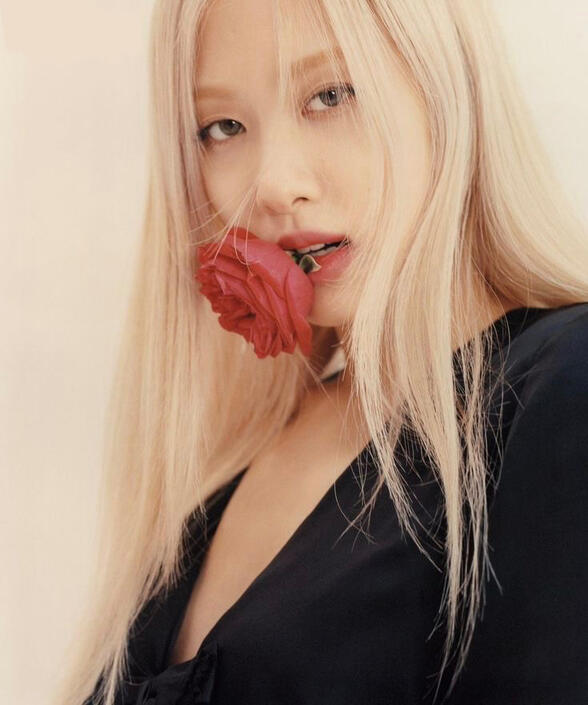
BASIC INFORMATION.
birth name. choi junhee (최준희).
professional name. thea.
nicknames. jun (family) · june (close friends abroad, rarely used).
gender. female · she/her.
sexuality. bisexual.
date of birth. december 2, 1999.
occupation. film director · screenwriter · creative producer.
birthplace. seoul, south korea.
current residence. between seoul and wherever production takes her; frequently traveling for film festivals, location scouting, and international productions.
languages spoken. korean · english · french (conversational). HER APPEARANCE.
height. 168 cm / 5′6″.
build. slender, graceful, quietly elegant.
skin. fair with neutral undertones, luminous beneath natural light.
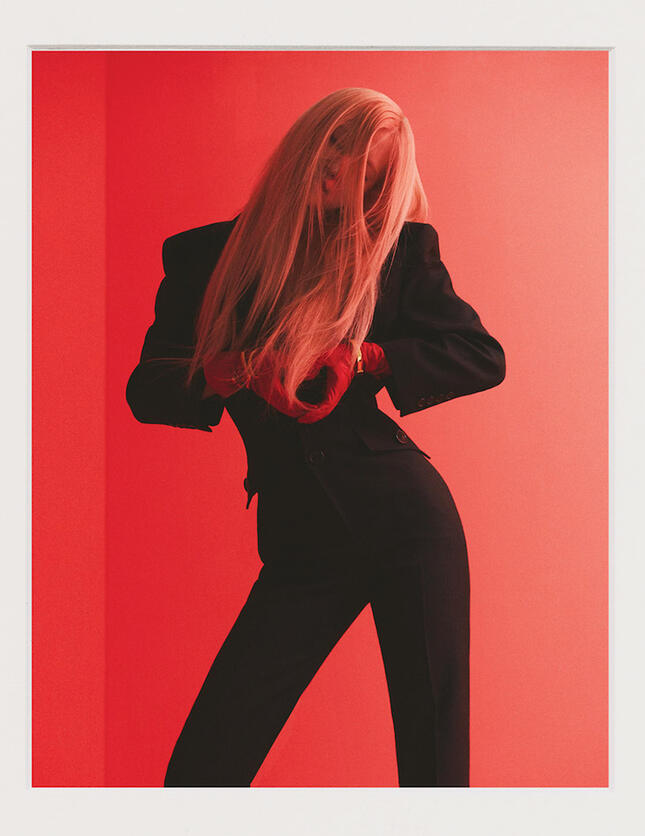
hair. platinum blonde; silky and naturally straight, most often worn loose with a soft middle part, falling effortlessly past her shoulders, or gathered into a low knot during long days on set.
eyes. deep brown, contemplative, carrying a quiet melancholy softened by an unmistakable warmth.
| current life update |
|---|
| What’s she reading? The Bell Jar · The Little Prince · On Earth We're Briefly Gorgeous · A Little Life. |
| What’s she watching? Wong Kar-wai · Hirokazu Kore-eda · Céline Sciamma · Greta Gerwig · Park Chan-wook. |
| What artist she’s been listening to? · Phoebe Bridgers · Mitski · Bon Iver · Cigarettes After Sex · The Marías · Laufey · Daniel Caesar. |
HER PERSONALITY.
positive traits. observant · composed · perceptive · compassionate · intellectually curious · patient · quietly charismatic · imaginative · steadfast.
negative traits. emotionally guarded · perfectionistic · overthinks relentlessly · conflict-avoidant · prone to self-isolation · quietly stubborn · carries guilt long after others have moved on.mbti type. INFJ — contemplative, emotionally perceptive, purpose-driven, and guided by intuition more than impulse.
enneagram. 4w5 — the individualist; introspective, deeply creative, quietly melancholic, forever searching for authenticity and meaning.attachment style. fearful-avoidant — longs for profound emotional intimacy yet instinctively withdraws when vulnerability feels irreversible, often convincing herself that distance is a form of protection.
defining quality. a storyteller who listens more than she speaks, finding meaning in silence where others rush to fill it. She possesses an uncommon sensitivity to the invisible threads connecting people, preserving fleeting emotions through cinema while quietly struggling to confront them within her own life.
PAGE 1.
HOW DID SHE BECOME THE THEA CHOI ?
Before she became Thea, the filmmaker whose work would come to define quiet longing for audiences around the world, she was choi junhee, a child born in Seoul on december two, into a marriage that had already begun to unravel before she was old enough to understand what love demanded of two people.Her father was an architect whose life revolved around precision, routine, and permanence. Buildings, he often said, should outlive the people who designed them. Her mother, by contrast, possessed a temperament that could never remain still. Having studied literature before eventually working in arts administration, she found herself irresistibly drawn toward cinema, galleries, and the quiet poetry hidden within ordinary life. Their differences had once attracted them to one another. Over time, however, those same differences became impossible to reconcile. One dreamed of roots; the other longed for movement.Their separation arrived not with infidelity or explosive arguments, but through years of accumulated silence. she would later struggle to remember a single fight. Instead, she remembered the absence of conversation. Breakfasts eaten across from one another without meeting each other's eyes. Evenings where the television filled a living room no one truly occupied. She watched affection gradually transform into courtesy, then courtesy into distance. It was a slow dissolution, almost imperceptible while it was happening, until one morning her father quietly informed her that her mother would be moving to Australia. She was eight when the divorce proceedings remained civil, largely because neither parent wished to burden their daughter with hostility. Custody was settled without spectacle. Her father believed Junhee deserved stability in Seoul. Her mother believed she deserved the opportunity to begin again somewhere neither of them would constantly be reminded of what had failed. In the end, Junhee was asked a question no child should ever have to answer."Where do you want to live?" She chose her mother. Not because she loved her father any less, but because she sensed, even then, that her mother was the one most afraid of being left alone. Within months, the two relocated to Sydney, Australia, where everything felt impossibly unfamiliar. New streets. New schools. New accents. A language she understood only through textbooks suddenly surrounded her everywhere she went. The first year was painfully isolating. she spoke little in class, afraid her English would betray her uncertainty. She missed Seoul's winters, neighborhood convenience stores, and the comforting familiarity of hearing Korean spoken around her. More than anything, she missed her father, whose phone calls gradually became weekly rituals stretched awkwardly across time zones.Her mother worked tirelessly to build a new life for them. During the day she found work at an independent arts organization that partnered with local cinemas and cultural festivals. On weekends, instead of leaving her at home, she took her along. Together they wandered museums, secondhand bookstores, photography exhibitions, and neighborhood cinemas screening films from every corner of the world. Money was often tight, but admission to an afternoon screening cost less than many other luxuries, and her mother believed stories were never an expense.Those weekends quietly transformed her understanding of the world. While other children became enamored with fantasy franchises or animated adventures, she found herself captivated by films that lingered on silence. Japanese family dramas where grief existed in the spaces between dialogue. French romances built upon glances rather than confessions. Korean independent films that observed ordinary lives with extraordinary tenderness. She rarely understood everything she watched, but understanding was never the point. After every screening, her mother would ask the same question."What stayed with you?" Not the plot. Not the ending. Only the feeling that remained after the lights came back on. Without realizing it, she began studying people the same way filmmakers studied light. She noticed pauses in conversations, the rhythm of footsteps echoing through train stations, strangers staring thoughtfully through rain-covered windows. She became fascinated with moments that most people overlooked, believing they somehow revealed more about a person's life than dramatic declarations ever could.By adolescence, she carried a small film camera almost everywhere. She photographed empty café chairs, apartment balconies at sunset, reflections in puddles after storms, forgotten belongings on public benches. Her photographs rarely included faces. Instead, they documented the traces people left behind. Cinema, she realized, was simply photography allowed to breathe. Her relationship with her father remained affectionate despite the distance. They exchanged letters long after emails became commonplace, partly because he believed handwriting preserved sincerity in ways keyboards could not. Whenever she returned to Seoul during school holidays, she noticed how much smaller the city seemed each year, while her father appeared somehow older each visit. They loved each other deeply, but geography had quietly taught them how to express affection through absence rather than proximity.After graduating from secondary school in Sydney, she was accepted into the London Film School, a decision that felt both exhilarating and terrifying. Leaving Australia meant leaving the life she and her mother had painstakingly rebuilt, yet London represented the possibility of becoming the filmmaker she had long imagined. At nineteen, she packed two suitcases, several notebooks filled with observations, and a camera her mother had given her before boarding another one-way flight.London reshaped her entirely. There, she immersed herself not only in directing and screenwriting but in literature, philosophy, architecture, painting, photography, and music, believing every art form informed the others. She spent countless afternoons at the BFI Southbank, evenings wandering Tate Modern, weekends buried in secondhand bookshops, and nights discussing cinema until sunrise with classmates from around the world. It was during this period that she adopted "Thea" as her professional name. What began as a practical decision for international collaborations gradually evolved into the identity under which she would introduce herself to the world.Her student films quickly distinguished themselves through remarkable emotional restraint. Professors praised her confidence in allowing silence to carry scenes others would fill with dialogue. Rather than explaining her characters, she trusted audiences to discover them. One of her graduation shorts premiered at a European student festival, attracting the attention of independent producers who recognized an unusually mature cinematic voice. From there, her career unfolded steadily rather than meteoricly. She directed intimate independent features that traveled through Busan, Berlin, Venice, Toronto, and eventually Cannes, earning acclaim for their quiet humanity and painterly visual compositions. Critics came to describe her as a filmmaker of extraordinary sensitivity, someone capable of transforming the smallest gestures into profound emotional experiences. Yet despite international recognition, she remained deeply private, convinced that a director's life should never overshadow the stories they chose to tell.In many ways, every film she has directed can be traced back to the life she lived before she ever stepped behind a camera. A childhood divided between countries. A family reshaped by distance rather than resentment. A mother who taught her to look beyond what happened and ask what remained. A father who showed her that love could endure even across oceans. Somewhere between Seoul, Sydney, and London, she discovered that home was never a place she could permanently inhabit. Instead, it became something she spent the rest of her life searching for, one film at a time.
EDUCATIONAL BACKGROUND 2005 – 2010
Seoul, South Korea
Completed her early primary education before relocating overseas following her parents' divorce.2010 – 2016
Sydney, Australia
Completed primary and secondary education after immigrating with her mother. During these years, she developed a growing fascination with world cinema through Australia's independent film scene, frequently attending screenings, galleries, and cultural festivals. She also participated in her school's film and photography clubs, where she wrote and directed several short student films and received recognition in local youth film competitions.2017 – 2020
London Film School
Master's in Filmmaking (Directing Specialization)Accepted into the internationally renowned London Film School, where she specialized in directing while receiving comprehensive training in screenwriting, cinematography, editing, sound design, and producing. Her graduate work became known for its restrained emotional storytelling, long-form visual compositions, and emphasis on silence as narrative language.Her thesis film premiered at multiple international student film festivals across Europe, earning recognition for Best Student Director and Best Short Narrative, ultimately attracting the attention of independent producers and launching her professional career.Throughout her time in London, she frequently attended masterclasses at the British Film Institute (BFI), studied contemporary European cinema, and immersed herself in literature, architecture, photography, and fine arts, influences that would later become hallmarks of her filmmaking style.
PLEASE READ BEFORE YOU FOLLOW THIS MUSE.
[001.] This account exists solely for fictional storytelling and roleplay purposes. The character portrayed here is an original fictional work and is not affiliated with, nor intended to represent, Park Chaeyoung (Rosé), BLACKPINK, YG Entertainment, or any associated individuals or entities. Any resemblance is limited to the use of a face claim for visual inspiration only. Minors (under 18) are kindly asked not to follow or interact.[002.] This account remains strictly in character unless otherwise indicated. Out-of-character communication is reserved for plotting, scene clarification, scheduling, or discussing story direction. All interactions, relationships, events, and dialogues portrayed through this account are entirely fictional and should not be interpreted as reflections of the face claim, their real-life counterparts, or the writer.[003.] The writer is 21+ years old out of character and works full-time, so responses may occasionally be delayed or sporadic depending on work commitments and availability. Writing quality will always be prioritized over speed. Romantic dynamics and ships are chemistry-based and will develop naturally through writing rather than pre-established expectations. Please allow relationships, whether platonic, familial, or romantic, to evolve at their own pace. Respect character boundaries and avoid rushing interactions or forcing emotional progression. Godmodding, metagaming, and imposing storylines without prior discussion are not permitted. Plotting is always welcome, and open communication is encouraged to ensure an enjoyable collaborative writing experience for everyone involved.[004.] Any mature or age-restricted writing, should it occur within the boundaries of collaborative roleplay, will be kept separate on a private account and will remain entirely dependent on established character chemistry and mutual writer consent. This account primarily focuses on narrative-driven storytelling, character exploration, and literary writing. The character draws inspiration from Clementine Kruczynski (Eternal Sunshine of the Spotless Mind), Amélie Poulain (Amélie), and the quiet observational spirit of Paterson (Paterson), while ultimately remaining an original interpretation with her own voice, history, and identity.
PAGE 2.